Showing posts with label short story. Show all posts

Tuesday, September 10, 2013

Screwing Up Mongolia, Cover Reveal


A special thanks to Tara Rimondi for her amazing cover art. Here's a link to her website.

Here's the blurb.

As if being a teen guy isn’t hard enough, Henry is also a time traveler with a job to do. And a horde of Mongols who don’t want it done.

It should’ve been easy. All Henry and his girlfriend Miranda needed to do was time travel into a Mongolian caravan, steal some mammoth tusk, and get out. But thanks to a peacock, the Khan’s warriors attack them with scimitars swinging.  Only Henry’s Granddad can help, and he doesn't know who they are.

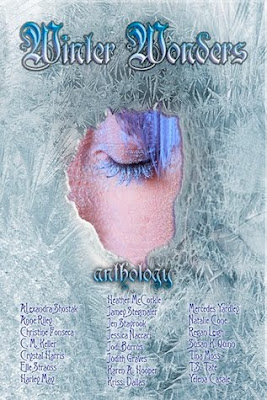
"Screwing Up Mongolia" is a Screwing Up Times series short story and comes between Screwing Up Babylon and book three. It was originally published in Winter Wonders, an anthology published by Compass Press.

If all goes well, I hope to have "Screwing Up Mongolia" available soon. I'll definitely post a blog when it's live.

Tuesday, December 4, 2012

Screwing Up Mongolia

"Screwing Up Mongolia" is out! *Throws confetti!* "Screwing Up Mongolia" is a Screwing Up Time series short story. And it's included in Winter Wonders, a winter themed anthology of short stories published by Compass Press, recommended for those aged teen and above.


The story is set in the time between Screwing Up Babylon and book three of the Screwing Up Time series. And, of course, the story has Mark (Henry) and Miranda in it.

Here's a link to the e-book version, which is selling for $4.99 at Amazon.
Here's a link to e-book at Barnes & Noble, also selling for $4.99.
And one final link to the paperback version, which is selling for $9.99.

One more bit of information, all the proceeds from the anthology go to Literacy Inc., an organization that teaches teens the importance of reading and offers them a chance to win  a free college education.


(NOTE: Make sure to come back and visit the blog on Friday! I'll have some exciting news to share.)

Here I am with my author copies.


All Proceeds Go To Charity!   Here's the cover with the list of all the authors.

Tuesday, June 12, 2012

A Single Scene


A month ago, I signed a contract to write a short story for an anthology. At the time, I thought, “No problem. I can whip out a short.” After all, I’ve written lots of short stories. Then, I sat down to write it. And it wasn’t as easy as I thought.

When you’ve been writing novels for a long time, the short story skills get rusty. A writing friend who also is in the anthology was having a similar problem. She’d started two short stories only to have them crash and burn.

The problem is the scope and complexity. With a novel, the author introduces layers of complexity—tensions, minor characters, hints of character development, subplots, etc. Short stories only have hints of these elements. Some not at all. Or they focus on one aspect of these elements. Mentally, I knew this. But I couldn’t get it to work on paper. Every idea I came up with was too convoluted for a short story with a maximum of 5000 words. The plots couldn’t be resolved in the space, and the settings and characters couldn’t be developed. I knew that if I wrote what I had in mind, I’d end up with a glorified plot sketch. And I (and my readers) didn’t want that.

So I talked with a friend. She’s been a published writer for years and years. And she’s done it all—novels (sequels and stand alones), novellas, short stories, etc. I said, “Help.” She told me, “Remember a short story (particularly of that length) is a single scene.” I wish I could say that it was a lightning bolt that struck my mind. It wasn’t. But I began to ruminate on what she said.

I realized I was doing too much. Everything in the short needs to revolve around a single writing goal. In my mind, my short story had three settings, several plot points, and too many characters. I realized that my first setting was only a starting place. A place where my characters would start from on their journey—it would have to be cut. I’m in the midst of trying to cut the second setting. A single scene, I keep telling myself.

After taking apart the settings, I cut all but one plot point. My characters needed a single goal. Everything needs to flow from that goal. If it doesn’t, it needs to be cut. (Remember the writer’s mantra, “Kill your darlings.")

But setting and plot trimming weren’t enough. Once I trimmed those, I realized that I needed to dump three of the six characters that inhabited my story. I’m sure some of my readers will miss seeing their favorite characters in the short story (my short uses the characters from my Screwing Up Time novel), but that’s the way it is with a short story.

Now the story is beginning to feel manageable. Of course, I haven’t put pen to paper yet. But in theory, the story feels doable.

What about you? What helps you focus your writing goals for a short story? I’d love to hear your suggestions.

Tuesday, February 7, 2012

Sequels, Part Two, Taking Joy in Writing


Two weeks ago, we discussed sequels. Why they’re hard to write, how to avoid sophomore novel pitfalls, etc. And while it was great to hear everyone’s thoughts, I still had a lot of anxieties. But that’s where a good writing friend helped, and I thought you all might benefit from her wisdom. (Thanks, Sharmon.)

As I listed all my worries about having my readers like book two as much as book one, she said, “Of course, not all your readers will like it as much.” That stopped me cold. Of course, I knew that in my head that people have different favorites, but to have her say it aloud really made me stop and think. Then she asked me about all the big series I’ve ever read from the Chronicles of Narnia to The Lord of the Rings to the Harry Potter books. She asked me if I had favorites. I did. And they weren’t the same favorites that others had. For example, I thought The Lion, The Witch, and The Wardrobe was okay. But I really didn’t like The Last Battle. On the other hand, I loved The Magician’s Nephew and The Horse and His Boy.

She reminded me that certain stories appeal to certain readers and there’s no getting around that. I can’t write a book that will make everyone happy. (Oh, right. You’d have thought that I already knew that.) She reminded me that the best thing I can do is to have fun as the novelist. If I have fun with the story and take joy in writing it—that is the thing that readers will latch onto. That’s what they crave. A good story.

I think that’s the lesson to writing anything from a short story to a novel. We must take joy in the telling. And when we lose sight of that, we begin to lose our ability to write.

What about you, readers? Can you tell when a writer is taking joy in the telling? And writers, what do you think?

Tuesday, January 17, 2012

Short Stories Vs. Novels


I’m now 7000 words into the short story, which makes it a long short story since it’s not done. The other day, I was reading an article by a famous novelist who released a short story about her famous characters between the publication of one novel and the next. Her fans did not like it. They complained. But as the author listed the complaints, it occurred to me that the complaints were because the readers didn’t understand the difference between a novel and a short story. They had “novel-type” expectations of a short story. And there’s no way an author can satisfy those types of expectations. A short story can’t be a novel. So I thought, since I’m working on a short story, that it might be helpful to reader and writers to discuss what the difference is between a novel and a short story. Especially since I’ve had the same confusion.

When I was in junior high, my teacher assigned our class to write a short story. I started off with a bang. Then, twenty pages or so into the “short” story, I realized that I had no hope of finishing it. And instead of the teacher saying, “My dear, here’s what you need to do.” She said, “Twenty pages? Wonderful. Don’t worry about finishing the story, just turn in what you have.” (Now maybe she said this because she didn’t want to read another twenty pages of junior high penmanship—I lived during pre-PC days.) When the teacher handed back my “short story,” I’d gotten an A. At that point, I realized the assignment was about putting pen to paper, not writing a short story. I was bummed. And I never learned how to write a short story until I got to college.

I was anxious when I took my first fiction writing class—was I going to write another long mess without an end? Then, I discovered something. (Clearly, I wasn’t the sharpest knife in the drawer or it would’ve occurred to me sooner.) A short story has one plot point and a limited number of characters. Ah, that was my problem. Every time I’d written a short before, I wasn’t writing a story, but a novel. (Or a novella, but that’s a whole other discussion.) So what’s a short story? According to Poe, who some call the originator of the short story, a short story is a narrative that can be read within 1 ½ to 2 hours (depending on whether you have to get more chocolate—okay, I added that part) and is limited to “a certain unique or single effect.” In other words, you have to have a limited number of characters and the whole story has to lead to a single purpose or conclusion. The “effect” may be the resolution of the plot that’s developed, or it may be an exploration of a character, which is common in modern literary fiction (and may be really boring to read).  This means that a short story can’t be as intricate as a novel—not as many twists, not as much character development, etc.

Think of a short story, especially one where the author is writing a short about characters that already live in a novel, as a love letter to the reader. The author is giving you a snippet of the characters’ lives while you wait for the next novel, something to tide you over while the hard work of writing the next novel happens. It’s something to remind you that the characters aren’t sitting around doing nothing while you wait for the next book.

If any of you have thoughts about the differences between short stories and novels or expectations of each, I’d love for you to share them.

N.B. The information about Poe came from Abrams’s A Glossary of Literary Terms.
A new blog, Novel d'Tales, is hosting a giveaway and my novel, Screwing Up Time, is the prize. Check it out. 

Tuesday, January 3, 2012

Progress


Happy New Year!

I hope the New Year finds you all well. My big news is that I finished the first big edit to the sequel of Screwing Up Time. My goal was to finish it before the New Year. Okay, my goal had been to finish it before Thanksgiving. But the seven family surgeries of 2011 took care of that very, very fast. Still, I’m pretty excited that it threw off my goal by only a month.

Now my first beta reader has the book. She’s looking for plot inconsistencies or holes. As soon as she’s finished, I’ll get back to work. For my next edit: I’ll be fixing any plot holes or boring parts (hopefully, there aren’t many). After that, I’ll do a voice edit. That’s where I’ll get into the nitty gritty of the text to make sure that the book “sounds right.” Mark/Henry tells the story and if it doesn’t sound that way, the novel will fail.

So while I’m waiting for the beta, what will I be doing? Writing a short story that takes place between book one and book two. I’ve got the story idea, so, assuming my family can stay out of the hospital—we’ve already had one trip this new year, I’ll start it today.